India’s Education System Is Evolving. Aethermind Is Building for What Comes Next!
 TPTV | The Punjab TV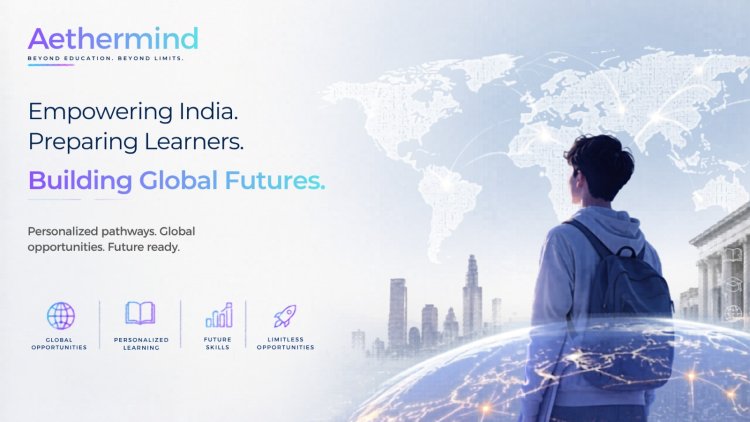
India’s education system, one of the largest in the world, is standing at a critical point of transition.
The country currently serves more than 250 million school students across nearly 1.5 million schools, creating an education ecosystem of extraordinary scale and complexity.
Yet, even as access to education has expanded, concerns around employability, adaptability and global readiness continue to intensify.
Industries are evolving faster than traditional academic structures. Employers increasingly seek communication skills, problem-solving ability and interdisciplinary thinking alongside formal qualifications. Parents, meanwhile, are beginning to look beyond marks and board examinations toward pathways that provide broader exposure and long-term relevance.
This changing environment is creating space for a new generation of education organisations attempting to complement the existing system with more flexible and globally aligned learning models.
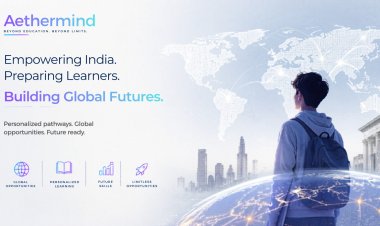
Among them is Aethermind, founded by Amit Sharma, which is building personalised education pathways aimed at connecting Indian learners with international opportunities and future-focused skill development.
The organisation’s model departs from the traditional one-size-fits-all structure that has historically characterised much of India’s academic framework.
Instead, student pathways are designed around individual aptitude, career aspirations and global higher education goals, integrating academics with certifications, portfolio-building, future skills and experiential learning.
The timing of this shift is significant.
India’s K-12 education market was valued at nearly $49 billion in 2023 and is projected to grow substantially over the coming decade. At the same time, the country’s education technology sector continues to witness rapid expansion as hybrid learning models and digital infrastructure gain wider acceptance.
The National Education Policy (NEP) 2020 has further accelerated conversations around multidisciplinary education, flexibility and skill integration, encouraging institutions to move beyond rigid academic silos.
Aethermind appears to be aligning itself closely with these emerging priorities.
Its collaborations include Onfire Learning (USA) for internationally aligned academic programmes, Maxme (Australia) for future employability training, and AOBA International School (Japan) for globally recognised learning exposure.
Further strengthening its focus on workforce readiness, the organisation has partnered with TransNeuron Technologies to implement IBM Digital Skills Initiatives across schools and colleges. The collaboration introduces learners to industry-relevant competencies in areas such as Artificial Intelligence, Data Science, Cybersecurity, Cloud Technologies and professional digital literacy, helping bridge the gap between classroom education and the demands of a technology-driven economy.
The organisation also facilitates pathways such as Advanced Placement (AP), Dual Enrollment and GED programmes intended to support international university readiness among Indian students.Importantly, the company’s expansion strategy extends beyond metropolitan India.
Leveraging hybrid delivery systems and adaptive learning infrastructure, Aethermind has been working with learners across Tier-2 and Tier-3 cities, underserved communities and regions where access to globally relevant educational pathways has historically remained limited.
This broader accessibility is becoming increasingly central to India’s education transformation.
Industry observers note that the Indian edtech sector itself is evolving from direct-to-consumer growth models toward partnership-led ecosystems involving schools, institutions and international collaborators.
Aethermind appears to be positioning itself within this emerging phase by integrating with existing educational structures rather than attempting to replace them.
At the same time, a behavioural shift among Indian families is becoming increasingly visible.
A growing segment of parents is beginning to prioritise global exposure, communication skills, interdisciplinary learning and portfolio development alongside conventional academic achievement. While still emerging, this cohort is steadily influencing demand for alternative and internationally connected educational ecosystems.
For Amit Sharma, the focus remains on building systems that are adaptable, globally relevant and aligned with the realities of a rapidly changing world.
As India navigates the next phase of educational reform and international integration, organisations such as are positioning themselves not merely as edtech providers, but as participants in a larger rethinking of how education, employability and future opportunity intersect in the 21st century.